TSS Flash
Click a photo to enlarge
An emergency flasher for locating sunken model boats.
Price: €25
add to cartVideo
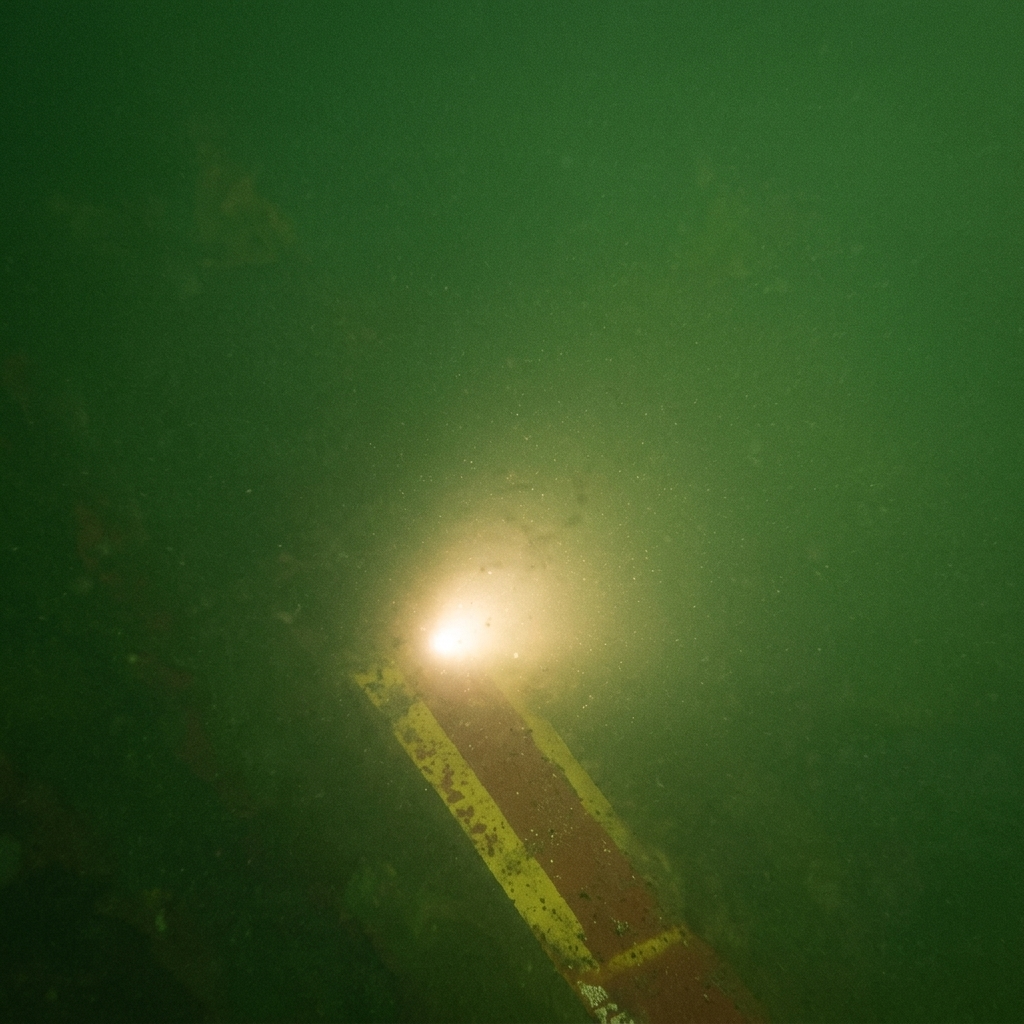
TSS Flash — demonstration
Description
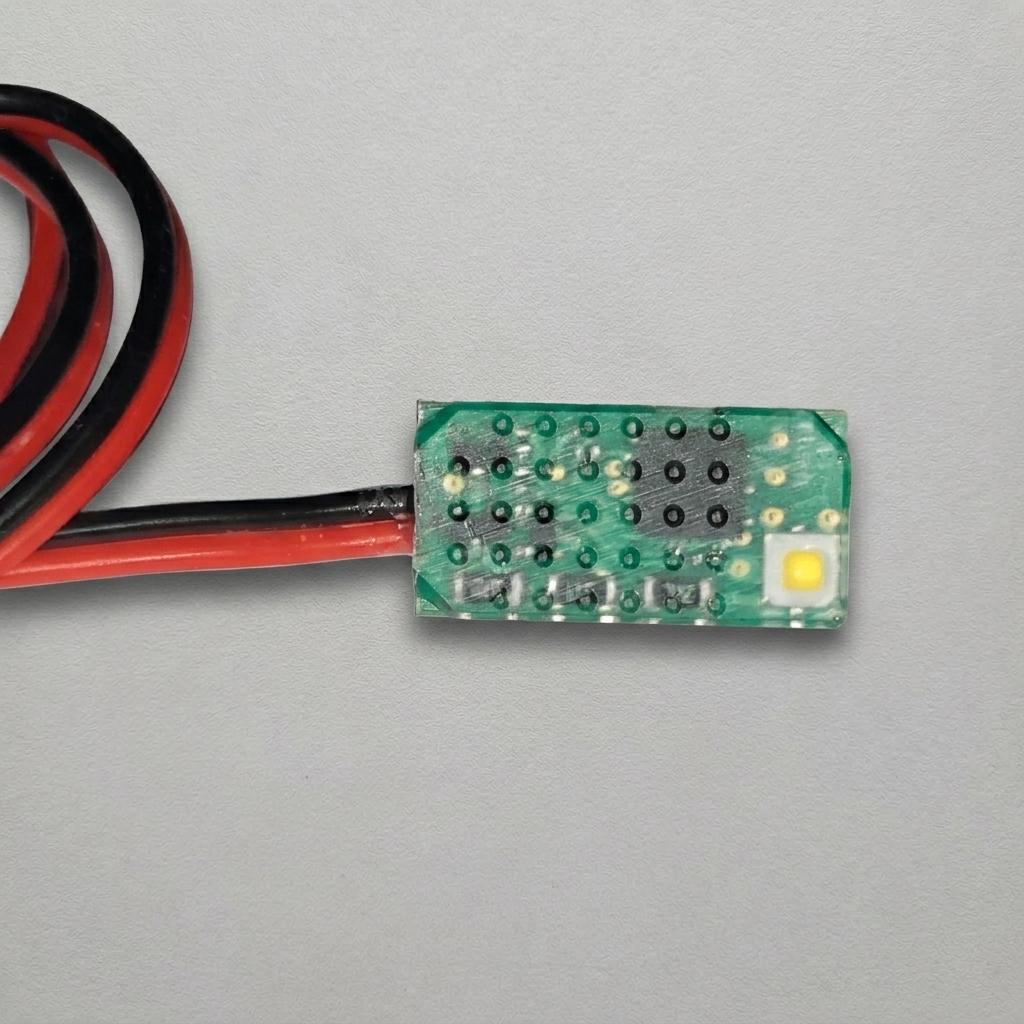
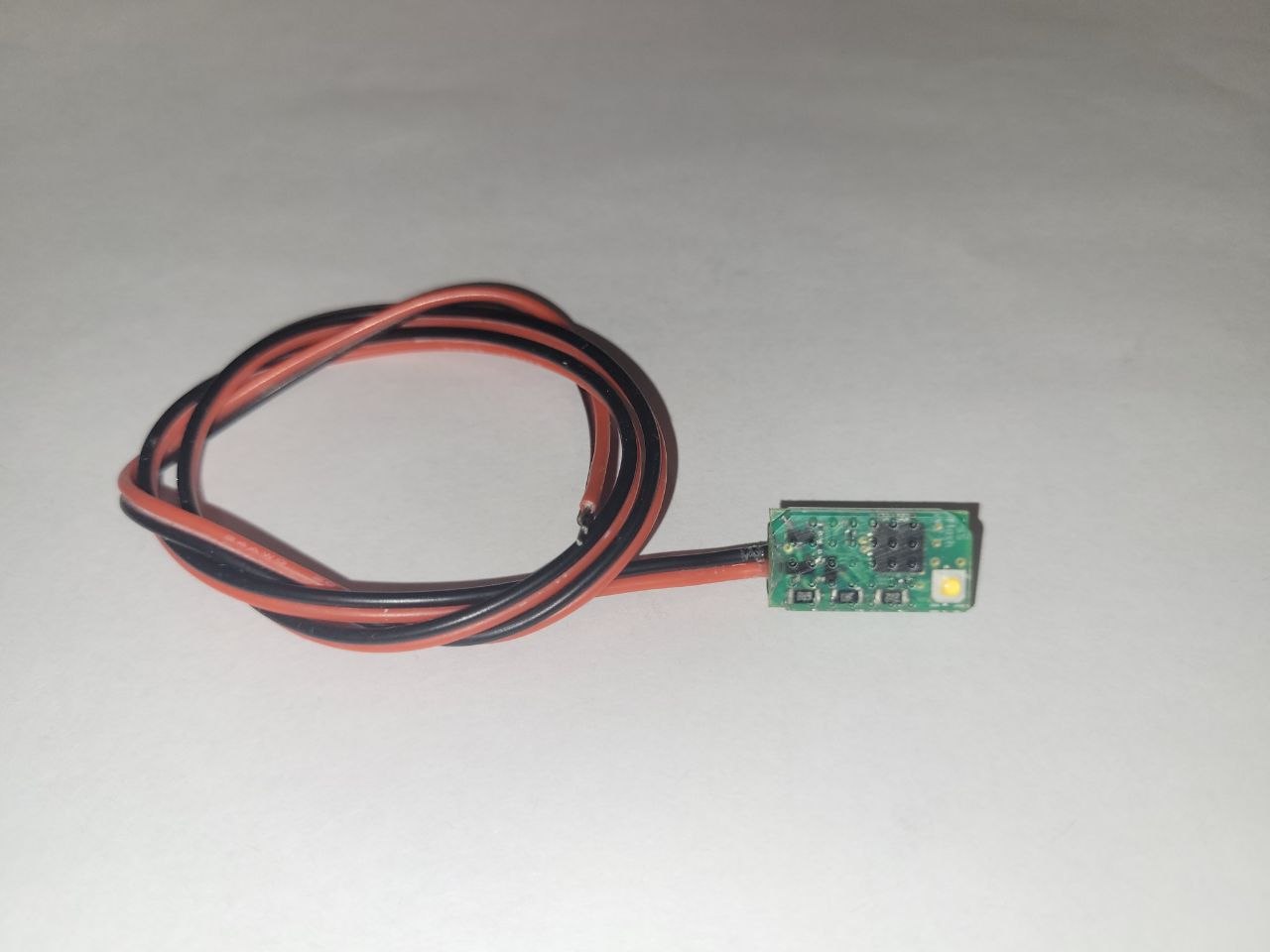
TSS Flash is an emergency flasher designed to make it easier to locate a model boat that has sunk or become embedded in the bed of a lake or pond.
The flasher starts operating 1 hour after the race begins, rather than 1 hour after power is switched on. This allows you to fully prepare the model in the evening and start your run in the morning.
The LED flash power is 30 W and may vary slightly with the supply voltage.
Visibility depends on the conditions in the water. In a lake with murky water on an overcast day, the typical viewing distance is 2–3 m. Visibility is greater in the evening, at night and in clear water.
The flasher operates reliably at supply voltages from 7 to 43 V (2S–10S). Please note: when using a 2S battery, the flashes may become significantly weaker if the voltage falls below 7 V.
The flasher has an epoxy resin housing and is protected against water ingress to IP68. It can be submerged to a depth of up to 10 m.
Standby current consumption is 2 mA, using 48 mAh of battery capacity per day.
Average current consumption in active mode is 30 mA.
Technical specification
| Parameter | Value | Note |
|---|---|---|
Flash power | 30 W | May vary slightly with the supply voltage. |
Supply voltage | 7–43 V (2S–10S) | When a 2S battery falls below 7 V, the flashes may become significantly weaker. |
Activation delay | 1 hour after the race begins | The timer starts with the race, rather than when power is switched on. |
Visibility | Typically 2–3 m | On an overcast day in a lake with murky water; greater in the evening, at night and in clear water. |
IP rating | IP68 | Epoxy resin housing. |
Submersion depth | Up to 10 m | |
Standby current consumption | 2 mA | 48 mAh per day. |
Average current consumption in active mode | 30 mA |
Installation and wiring
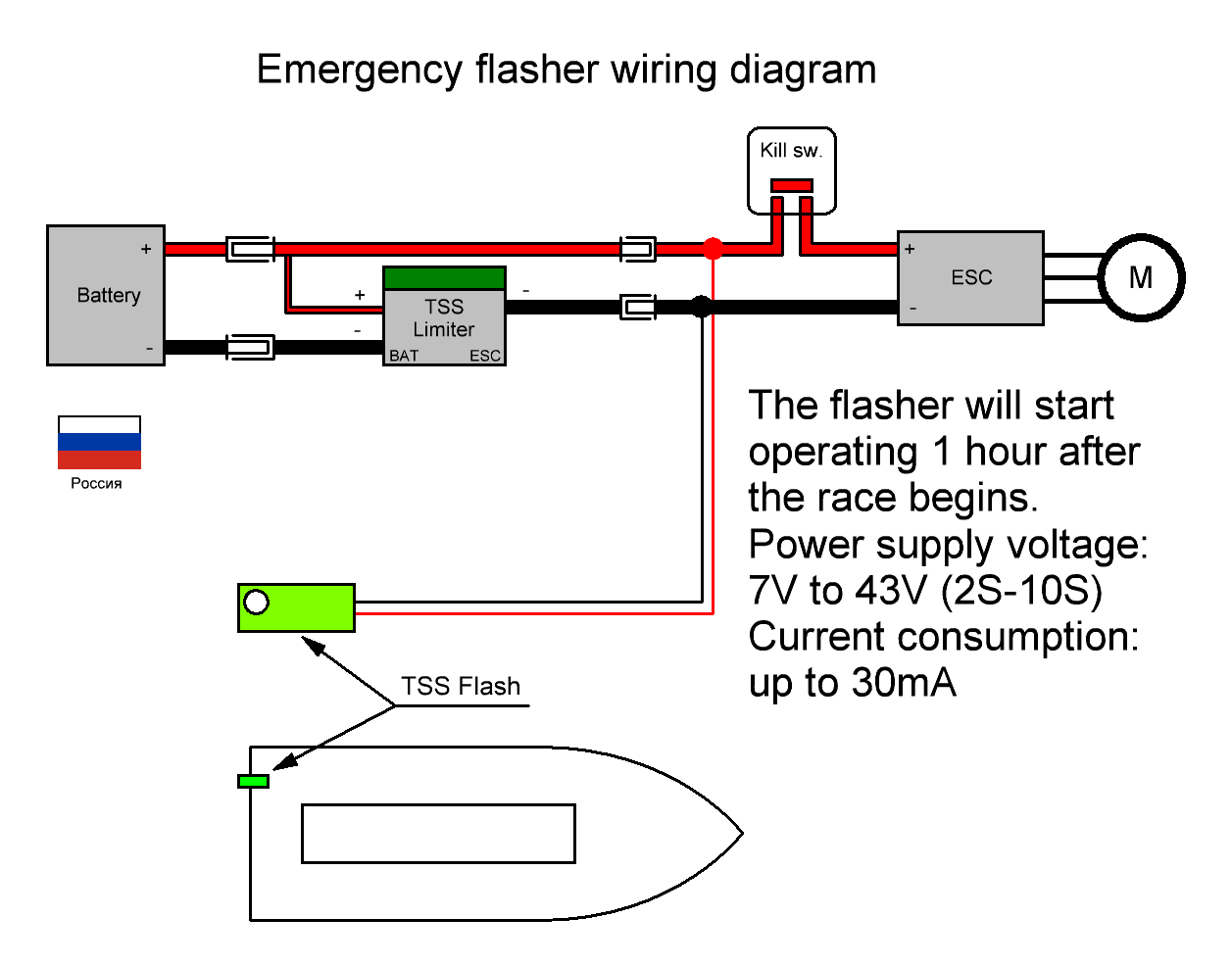
Mount the flasher near the top of the stern and secure it firmly in place with epoxy resin.
Soldered connections are recommended. Solder the red wire to the power lead between the battery and the emergency disconnect (after the limiter), and solder the black wire to the motor ESC's black power lead.
Do not use the battery balance connector or the limiter's wires to connect the flasher. Water exposure can quickly compromise the balance connector's electrical contact, while connecting to the limiter's wires makes it harder to replace the limiter quickly.
Wiring diagram
Cart
